Learning by doing
2025 has been a year where Unity4Water has focused on learning through practice. With pilots, cultivation experiments and close collaboration between partners, the project has continued to move from conceptual discussions to hands-on testing in real environments.
– What makes Unity4Water strong is the way different competencies are brought together around very concrete questions. By combining pilot-scale testing with academic research and close dialogue with partners, we can generate knowledge that is both scientifically robust and relevant for practical use, says Monica Odlare, Project Coordinator and Professor at Mälardalen University.
A key activity during the year has been the continued work at the pilot facility in Texas. Operating in a live setting has made it possible to test and observe water treatment processes under real conditions. This has provided insights into system behaviour, operational challenges and contextual factors that are difficult to capture in laboratory environments alone.
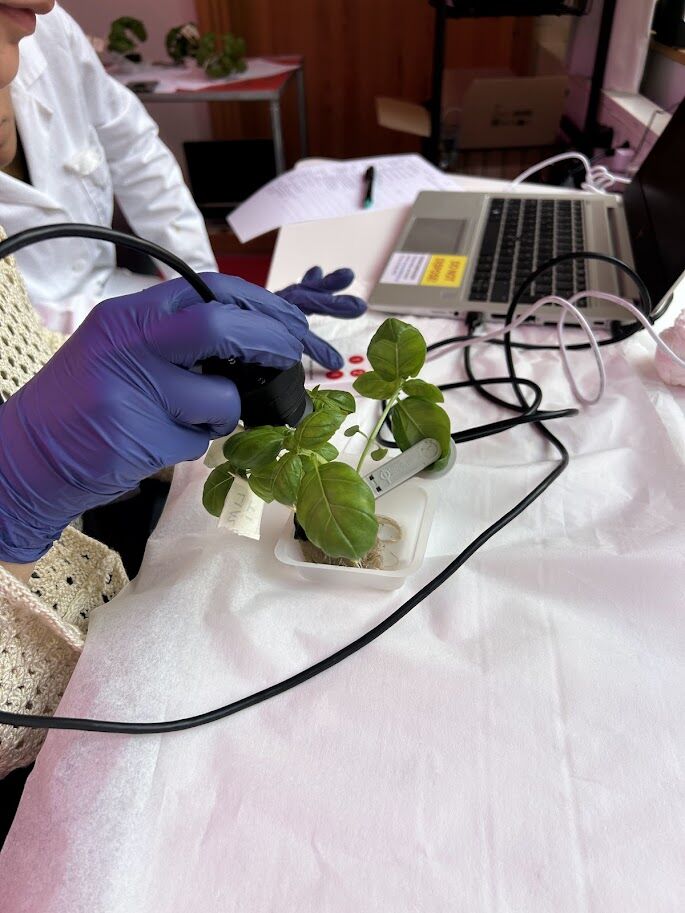
In parallel, cultivation experiments at Mälardalen Universityhave explored how treated water can be used in controlled growing environments. By studying the interaction between water quality, treatment methods and plant response, the project has been able to investigate potential use cases while also identifying limitations and questions that require further study.
Collaboration between partners has been central throughout the project. Unity4Water brings together research organisations, technology developers and application-oriented actors, allowing different perspectives to inform the work. Experiences from the pilot facility and the university-based experiments have complemented each other, creating a broader understanding of how technical, biological and organisational aspects interact.
Looking ahead, Unity4Water will build on the experiences from 2025 by continuing and expanding its experimental work, with a stronger focus on water reuse and reclaimed water for irrigation. The coming year will involve deeper investigation of how treated and reclaimed water can be safely and efficiently integrated into controlled growing systems, with focus on both technical performance and biological responses.
To support this, the project has invested in new growing units, enabling more flexible and parallel cultivation experiments. These units will allow the team to test different water qualities, treatment strategies and irrigation approaches side by side, creating new opportunities to explore how reclaimed water can be adapted to different crops and system designs.
– By continuing to work across pilot facilities, experimental infrastructure and partner environments, Unity4Water aims to further strengthen the link between research and real-world application. The focus remains on learning through practice, using experimentation, and collaboration to generate knowledge that can support more circular and resilient water use in food production and beyond, concludes Monica Odlare.